


Introduction
Cities are expanding faster than at any point in history. As populations concentrate in metropolitan areas, buildings account for a major share of energy consumption, material use, and carbon emissions. Sustainable architecture in urban environments responds to these pressures by reshaping how buildings are designed, constructed, and operated.
Rather than focusing only on aesthetics or short-term functionality, sustainable architecture integrates environmental responsibility with long-term efficiency and human well-being. In dense urban settings, even small improvements in building performance can create large-scale benefits across entire communities.
Understanding Sustainable Architecture
Sustainable architecture refers to the planning and construction of buildings that minimize environmental impact while supporting social and economic sustainability. It considers the entire lifecycle of a building, from material sourcing to demolition or reuse.
Key objectives include:
- Reducing energy demand
- Conserving water resources
- Lowering greenhouse gas emissions
- Improving indoor environmental quality
- Supporting long-term urban resilience
Urban sustainability depends heavily on how effectively buildings interact with transportation systems, infrastructure networks, and surrounding ecosystems.
Why Sustainable Architecture Matters in Cities
Urban areas consume a large portion of global resources. Without sustainable construction practices, cities face rising temperatures, worsening air quality, and increasing pressure on infrastructure systems.
Sustainable architecture helps address these concerns by:
- Lowering energy consumption across buildings
- Reducing reliance on fossil fuels
- Managing stormwater more effectively
- Improving urban microclimates
- Supporting healthier living environments
These improvements strengthen the long-term functionality and livability of cities.
Core Principles of Sustainable Urban Architecture
Energy-Efficient Design
Energy performance is central to sustainable architecture. Efficient buildings reduce electricity demand while maintaining comfort.
Important strategies include:
- Passive solar orientation
- High-performance insulation systems
- Natural ventilation pathways
- Energy-efficient lighting
- Integration of renewable energy technologies
These measures reduce operational costs while limiting environmental impact.
Responsible Material Selection
Construction materials influence both environmental performance and indoor air quality.
Common sustainable material choices include:
- Recycled construction materials
- Engineered timber products
- Locally sourced stone and aggregates
- Low-emission paints and adhesives
- Rapidly renewable resources such as bamboo
Selecting durable and recyclable materials supports long-term sustainability goals.
Water Management in Urban Buildings
Water-sensitive building design reduces pressure on municipal supply systems.
Effective solutions include:
- Rainwater harvesting systems
- Greywater recycling technologies
- Efficient plumbing fixtures
- Permeable landscaping surfaces
- Rooftop vegetation for stormwater retention
These strategies improve water security while supporting climate adaptation.
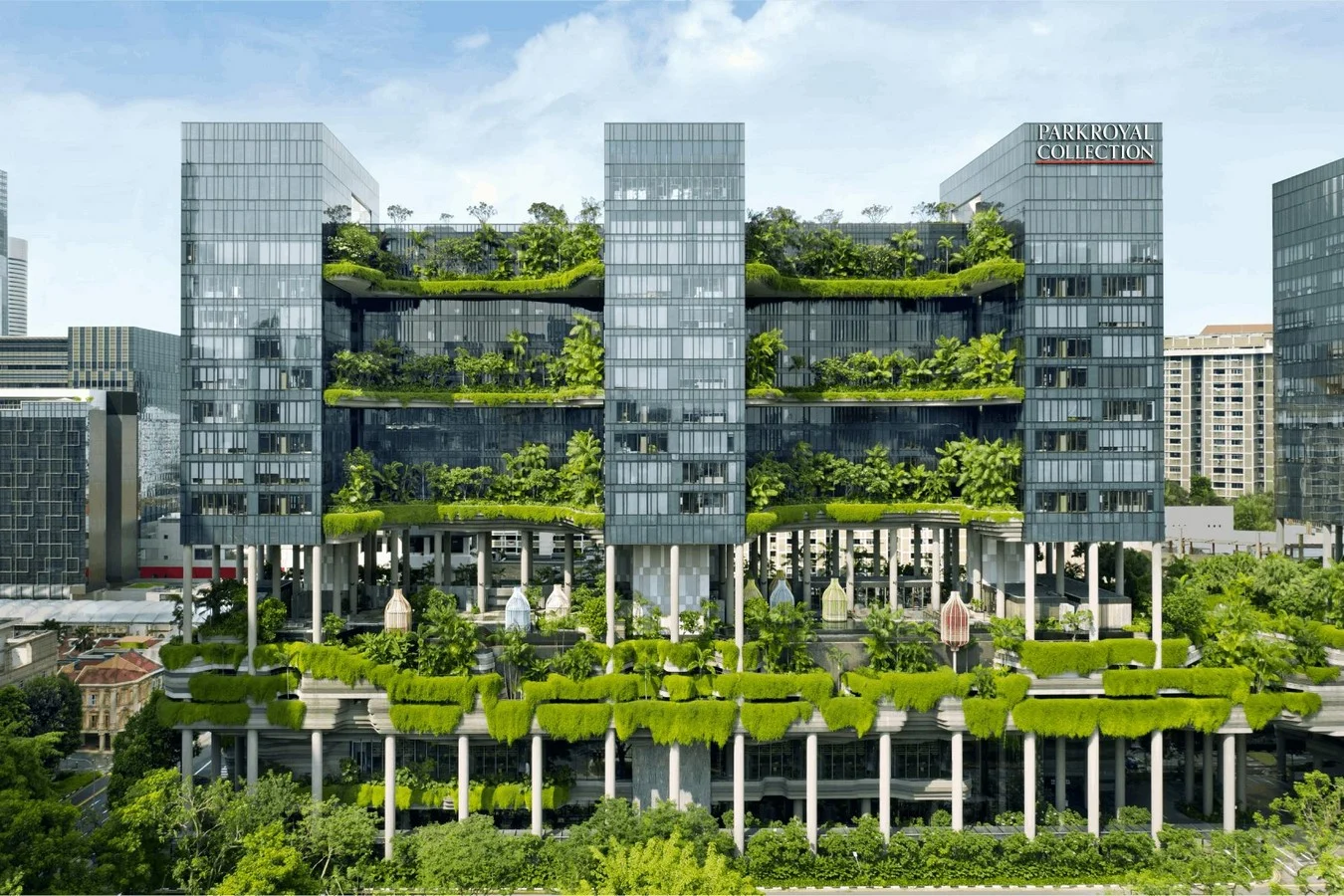
Integration of Urban Greenery
Urban vegetation improves both environmental performance and human comfort.
Examples of integrated greenery include:
- Vertical gardens
- Rooftop landscapes
- Courtyard ecosystems
- Tree-lined pedestrian corridors
- Community food gardens
These features reduce heat absorption, improve air quality, and enhance visual appeal.
Smart Technologies in Sustainable Buildings
Digital tools help optimize building performance and reduce resource consumption.
Examples include:
- Occupancy-responsive lighting systems
- Automated temperature regulation
- Energy monitoring dashboards
- Smart irrigation systems
- Predictive maintenance platforms
Smart infrastructure ensures buildings operate efficiently throughout their lifespan.
Urban Planning Approaches Supporting Sustainable Architecture
Sustainable architecture works best when integrated with broader planning strategies.
Transit-Oriented Development
Buildings located near public transport reduce travel distances and lower traffic-related emissions. Walkable neighborhoods encourage active lifestyles and improve accessibility.
Mixed-Use Development
Combining residential, commercial, and recreational spaces within the same district reduces commuting needs and strengthens local economies.
Climate-Responsive Building Orientation
Designing structures according to sun paths, prevailing winds, and seasonal conditions reduces reliance on mechanical systems.
Compact City Planning
Higher-density development supports efficient infrastructure use while protecting surrounding agricultural and ecological land.
Environmental Benefits of Sustainable Urban Buildings
Sustainable architecture contributes significantly to environmental protection.
Major benefits include:
- Lower greenhouse gas emissions
- Reduced construction waste
- Improved urban biodiversity
- Decreased heat island effects
- Enhanced stormwater absorption capacity
These improvements help cities adapt to changing climate conditions.
Economic Advantages of Sustainable Architecture
Although sustainable construction sometimes requires higher initial investment, long-term savings are substantial.
Economic advantages include:
- Reduced energy bills
- Lower maintenance costs
- Increased property market value
- Higher tenant satisfaction rates
- Stronger long-term infrastructure efficiency
Over time, these benefits make sustainable buildings financially practical.
Social Impact on Urban Communities
Sustainable architecture improves daily life in measurable ways.
Key social contributions include:
- Healthier indoor environments
- Increased daylight access
- Reduced noise exposure
- Stronger neighborhood interaction
- Greater connection with nature
Well-designed buildings create environments where people feel comfortable and productive.
Challenges in Implementing Sustainable Urban Architecture
Despite its advantages, adoption can face several obstacles.
Common challenges include:
- Higher upfront construction costs
- Limited technical expertise in some regions
- Regulatory complexity
- Supply chain limitations for eco-friendly materials
- Resistance to new construction approaches
Addressing these barriers requires coordinated action from policymakers, developers, and planners.
Emerging Trends Shaping Sustainable Urban Architecture
New technologies and design strategies are accelerating progress toward more sustainable cities.
Important emerging trends include:
- Net-zero energy buildings
- Modular prefabricated construction systems
- Climate-adaptive building façades
- Circular construction material reuse
- Integration of renewable energy microgrids
These innovations are shaping the next generation of urban development.
Frequently Asked Questions (FAQs)
1. How does sustainable architecture reduce electricity demand in cities?
It improves insulation, uses natural lighting strategies, and integrates renewable energy systems that reduce reliance on conventional power grids.
2. What role do architects play in sustainable urban development?
Architects design buildings that respond to climate conditions, optimize resource efficiency, and coordinate with planners to ensure long-term urban sustainability.
3. Can sustainable architecture support affordable housing projects?
Yes. Efficient design lowers long-term utility costs, making housing more affordable over time while improving living conditions.
4. How do sustainable buildings handle waste differently?
They prioritize recycling during construction, reduce material use, and often include systems for composting and waste separation.
5. Why is daylight important in sustainable architecture?
Natural daylight reduces electricity use and improves occupant health, productivity, and psychological comfort.
6. How does sustainable architecture influence transportation patterns?
By supporting mixed-use neighborhoods and transit access, it reduces dependence on private vehicles.
7. Are sustainable buildings suitable for high-density cities?
Yes. Sustainable architecture is especially effective in dense environments where efficient land use and resource management produce large-scale environmental benefits.

Comments are closed.