

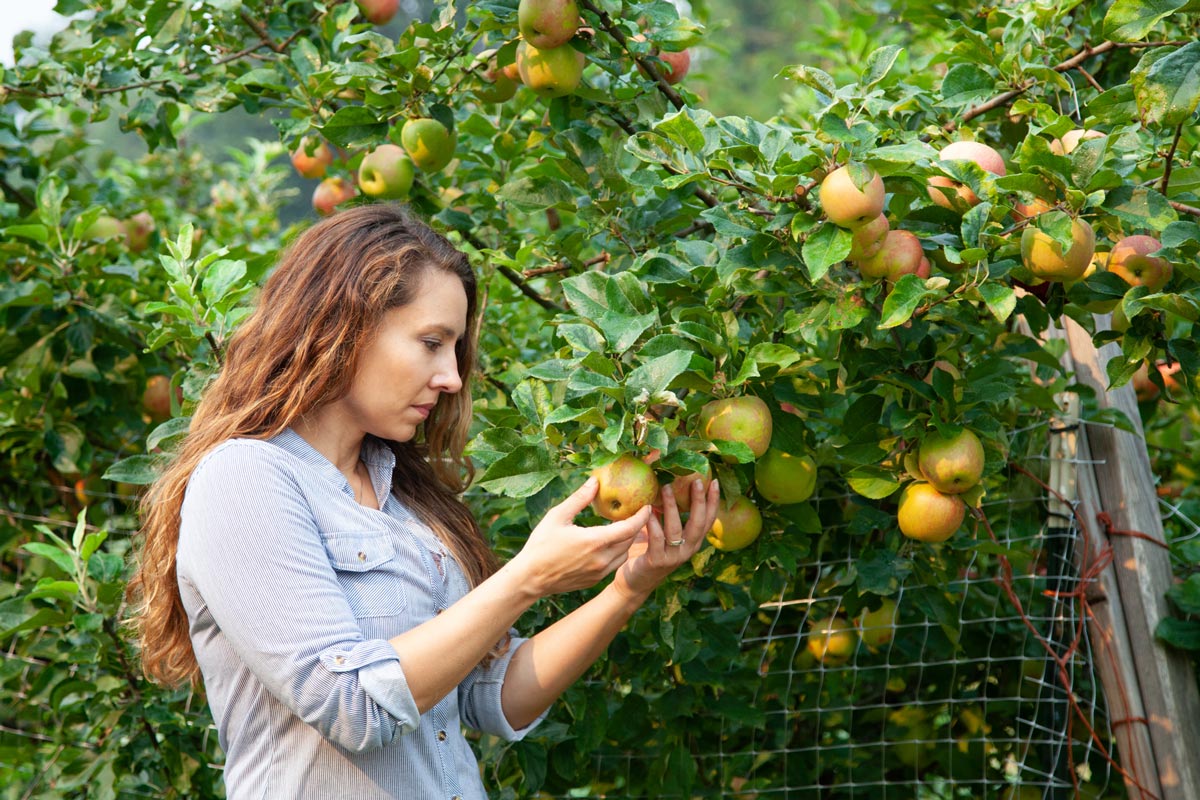

A family garden usually has to serve several purposes at once. It may be a play space, a place to eat outdoors, a route to the shed, a patch for pets, and a quiet corner for adults at the end of the day. A fruit tree can belong beautifully in that mix, but it should not make the garden harder to use.
Low-fuss does not mean careless. It means choosing a tree whose needs are clear and manageable. The right tree should be easy to water, safe to pick, proportionate to the space, and productive in a way the household will actually enjoy. It should invite attention rather than demand expert handling every weekend.
For families, the best fruit trees often become part of ordinary rituals: watching blossom open, checking small fruit after school, picking a few ripe pieces, or cooking something simple. That everyday connection is more valuable than a theoretical maximum crop.
The fruit trees specialists at ChrisBowers advise families to prioritise manageable size, reliable cropping, and easy access. They point out that a tree which can be pruned and picked from the ground is more likely to be cared for consistently. Their guidance also favours planting positions where children can enjoy the seasonal changes without trampling the root zone or making watering difficult. They also recommend thinking about where windfalls land, how the crop will be used, and whether the tree remains safe around play, paths, and seating. In a busy British family garden, the most successful tree is often the one that fits comfortably into everyday routines. A practical position lets the tree become part of family life rather than another job waiting for attention.
The strongest decisions usually combine ambition with restraint. It is tempting to choose the largest crop, the newest variety, or the most dramatic promise, yet a slightly more measured choice often gives better results. A plant that fits the space, receives consistent care, and matches the household’s appetite will give more satisfaction than one that asks for conditions the garden cannot offer. Good fruit growing begins with that honest balance.
That is why the buying stage deserves patience. The gardener is not only choosing a plant for this season, but setting up a relationship with the garden for the seasons that follow.
Keep the Tree Reachable From the Ground
Reachable trees are easier, safer, and more likely to be harvested on time. In a British garden, the small planning questions often have more influence than the most persuasive variety description.
The useful move is to choose a compact form or rootstock that keeps work at a sensible height. That gives the gardener a way to compare options by suitability rather than by excitement alone.
The mistake to avoid is creating a tree that needs ladders in a garden where children are playing. A fruit plant is forgiving in some ways, but it cannot easily escape a poor position or unsuitable scale.
Wet grass and uneven ground can make tall picking awkward in ordinary UK weather. These details can make two gardens in the same street behave differently, so the final choice should not be generic.
Ground-level pruning and picking allow small jobs to be done during short spare moments. That kind of basic attention usually matters more than occasional bursts of effort.
This is why restraint is often productive. Choosing a plant that fits comfortably can give better results than filling every available gap and then trying to manage the consequences later.
The long view matters because the first season is only an introduction. A tree or bush that receives steady early care is more likely to settle into healthy growth and become easier, not harder, to manage.
The tree remains useful without becoming a seasonal safety concern. The final tree feels chosen for the garden, not forced into it.
Choose Fruit the Household Will Eat
A reliable crop is only a benefit if it suits the people who live with it. For families in the UK who want fruit growing to be rewarding, child-friendly, and realistic around busy weeks, that detail affects the crop, the look of the garden, and the amount of care the tree receives after planting.
A sensible decision is to match variety choice to lunchboxes, baking, fresh eating, or preserving habits. It turns a broad intention into something that can be checked against the garden itself.
The common trap is planting something interesting that nobody really wants to pick. It often comes from treating the first season as proof that the long-term choice was sound.
Family routines can be busy when harvest arrives, so familiar uses help fruit disappear happily. The tree does not need perfect conditions, but it does need conditions that the gardener understands and can support.
A tree that fits meals and snacks receives attention because its value is obvious. The tree then becomes part of the garden’s normal rhythm rather than a special project that is always waiting for time.
A good planting decision has a quiet quality. It does not draw attention to itself as work; it simply makes watering, pruning, checking, and harvesting feel like natural parts of being in the garden.
It is worth considering the less glamorous months too. Bare branches, wet soil, short days, and leaf fall all reveal whether the planting has been placed with enough thought.
The crop becomes part of family life rather than a good intention. This is how a practical choice becomes a satisfying one over several seasons.
Put Watering Where It Will Actually Happen
Young trees need consistent care while they establish, even in a rainy country. It sounds simple, but it changes the buying decision because the tree must work in a real place rather than in an ideal description.
The practical response is to plant near a practical watering route rather than in a forgotten corner. Once that is clear, the remaining choices become easier to sort.
What causes trouble later is placing the tree where watering requires a long hose, heavy cans, or awkward access. Once roots are established, correcting that mistake becomes more disruptive than preventing it.
Dry spells can arrive during school holidays or busy work weeks when routines are already stretched. A choice that respects those limits is usually easier to keep healthy than one made from enthusiasm alone.
Mulch and clear soil around the base make each watering more effective. Practical access is a quiet form of insurance because it encourages timely watering, pruning, and picking.
It also helps to picture the decision on an ordinary weekday. The tree or fruiting plant has to sit beside real paths, tools, weather, and household habits, so the most useful choice is the one that still looks sensible when the garden is busy rather than freshly tidied.
The gardener should be able to repeat the care without needing perfect conditions. That is especially important in the UK, where a useful task may have to fit between rain, work, and daylight.
The first seasons become manageable rather than another household chore. The result is a planting decision that still makes sense when the tree is larger, the season is busier, and the garden is being used every day.
Avoid Thorny or Messy Pressure Points
The most convenient position is not always the best position for fruit. This is where practical gardening begins, especially when space, weather, and household routines are already fixed.
Gardeners do best when they think about paths, play areas, seating, and where windfalls will land. This keeps the purchase connected to care, access, and likely results.
For that reason, low-fuss fruit trees for sale should be judged by family use as well as by variety description.
The avoidable problem is placing soft fruit or dropping crops over surfaces that need to stay clean and safe. It rarely appears as a crisis on planting day, which is exactly why it deserves attention earlier.
Small lawns and paved patios often double as routes, play zones, and eating areas. Planning for that reality is not pessimistic; it is the route to a tree that settles and crops with less drama.
Siting the tree slightly away from pressure points protects both the crop and the garden. This also makes routine care easier to repeat, which is important after the first flush of enthusiasm has passed.
The same point applies when the garden is viewed from indoors. A plant that looks balanced from the kitchen window, does not interrupt movement, and remains easy to check will be noticed more often and cared for more naturally.
Good planning also protects enthusiasm. When the plant is easy to reach and its needs are understood, the gardener is more likely to keep enjoying it after the novelty has passed.
The planting feels generous without making daily life messier. That is the difference between a tree that merely survives and one that becomes a settled feature.
Make Seasonal Interest Easy to Notice
A family tree should offer more than one brief harvest moment. The point is not to make the choice complicated; it is to make the choice honest before the tree becomes permanent.
The decision should be to choose for blossom, leaf, fruit, and winter shape as part of the garden experience. It may feel less dramatic than choosing by name, but it gives the tree a stronger start.
The weak point in many plans is judging the tree only by crop weight and missing its wider value. A little caution before ordering can prevent a lot of untidy correction afterwards.
Blossom and autumn colour can be especially welcome in modest gardens where every plant is visible. This local context matters because garden advice works best when it is translated into the exact conditions outside the back door.
A tree placed where the household passes often becomes a natural point of interest. The best care plan is the one that fits an ordinary week, not a perfect gardening weekend.
There is a design value here as well as a cropping value. A fruiting plant gives blossom, foliage, structure, and seasonal change, so its place in the garden should make sense even before the crop is ready.
The real measure is whether the plant becomes easier to live with as familiarity grows. Each season should teach the gardener something helpful, not expose a mistake that was avoidable at the start.
Children and adults both notice the seasons through the same living feature. The garden gains fruit without losing the comfort, movement, and proportion that made the space useful in the first place.
Build a Simple Annual Routine
Families usually need repeatable habits, not complicated horticultural calendars. A gardener who answers this early usually avoids the expensive kind of disappointment that only becomes visible after several seasons.
A careful buyer will set a small number of seasonal checks for pruning, feeding, watering, and picking. That step gives the tree a defined role instead of leaving it to cope with whatever space is left.
The risk is making the tree dependent on a care plan that only works in a perfect week. When the tree is young, the problem may look harmless, but it can shape pruning, watering, and harvest work for years.
British weather rewards timely basics more than elaborate schedules. That is why observation is so valuable: it replaces general optimism with evidence from the actual site.
A short winter check, spring blossom look, summer watering rhythm, and harvest plan are enough for many gardens. When care is convenient, small checks happen before small problems become large ones.
The choice should also leave room for adjustment. British gardens rarely behave in exactly the same way every year, and a practical layout lets the gardener respond to dry spells, wind, growth, or heavier crops without rethinking the whole space.
Seasonal thinking adds another useful test. If the same position works for spring blossom checks, summer watering, harvest access, and winter pruning, the gardener has found a place that supports the plant through the whole year.
The tree grows into a familiar part of the year rather than a specialist project. Over time, that steadiness is more valuable than a choice that looked impressive only at the point of purchase.
That final point brings the wider subject back to family garden planting, where easy access, safe scale, useful crops, and forgiving care routines matter most. A good choice should still feel useful after the first season, after the first pruning decision, and after the first imperfect spell of weather. When the tree or fruiting plant fits the site and the gardener’s routine, it becomes easier to enjoy the harvest without turning the garden into a source of pressure.

Comments are closed.