

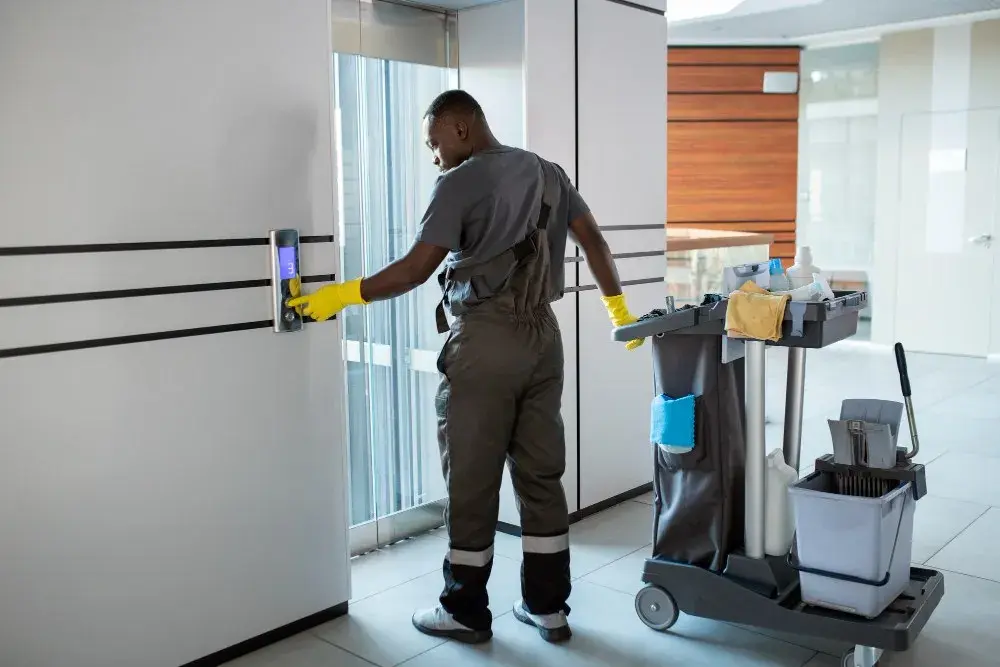

A commercial building’s cleaning program in month twelve should not look like the one it ran in month one. Traffic patterns settle in, finishes wear, HVAC balances out, and tenants start using rooms in ways nobody drew on the plans. A program that ignores that arc gets expensive fast, either over-servicing spaces nobody uses or under-servicing the ones everyone does.
The useful way to think about a first-year cleaning plan is as a progression with distinct phases. Each phase has different priorities, different risks, and a different working definition of “clean.”
Here’s how that arc tends to unfold, and where facility teams get the sequencing wrong.
Pre-Occupancy Sets the Baseline You’ll Be Measured Against
Before the first tenant walks in, the cleaning program is really a construction-recovery program. Drywall dust migrates into every horizontal surface, adhesives and finishes off-gas, and grout haze hides in corners you won’t spot until the light angle changes in April. A poor turnover here creates a year of complaints, because occupants set their expectations against the state of the building on move-in day.
Indoor air is a big part of that first impression, and it isn’t only about smell. Because the EPA estimates people spend roughly 90% of their time indoors, the residue left behind after construction keeps showing up in filters, on desks, and in complaints for weeks. Wipe-downs won’t cut it. HEPA vacuuming, damp-wiping high shelves and light fixtures, and a real ventilation flush belong on the pre-move-in checklist.
The First 90 Days Are for Learning the Building
Once occupants arrive, the program shifts from recovery to reconnaissance. The scope of work you signed is a starting hypothesis, not a finished plan. The first quarter is where a good crew figures out where the building actually gets dirty.
The scope should get rewritten at the end of this phase. If it doesn’t, the crew is cleaning the building on paper instead of the one that exists.
Months Four Through Nine Are Where Deep Work Belongs
By this point, the building has told you the truth about itself. Now the periodic work earns its keep: floor stripping and refinishing on the schedule the traffic data justifies, carpet extraction where you can see the lanes forming, high-dusting before it becomes visible from the ground, exterior pressure washing timed to the local pollen and storm calendar.
This is also the phase where sustainability commitments stop being abstract. If the property is pursuing or maintaining LEED certification, a documented green cleaning policy is a prerequisite, not a nice-to-have, and the audit trail has to reflect real practice. Product inventories, equipment specs, and training records should be current before anyone asks for them.
The Year-End Review Decides Whether You Renew or Rebid
The last phase is the one most teams skip. A first-year cleaning program should end with a formal review, not an auto-renewal nobody paid attention to. Pull the ticket data. Compare the original scope to what’s actually being performed. Walk the building with the account manager at the hour it’s dirtiest, not the hour it’s easiest to visit.
The right questions at this point are unglamorous. Are the same three complaints repeating? Is the crew stable, or are you meeting a new lead every month? Are the finishes wearing on the schedule the manufacturer predicted, or twice as fast?
Vendors that manage multi-site portfolios tend to expect this conversation and come prepared with the numbers, which is a good sign either way.
A building in year two is a different building than the one you opened. The cleaning program should have grown up with it, or it’s already behind.

Comments are closed.