

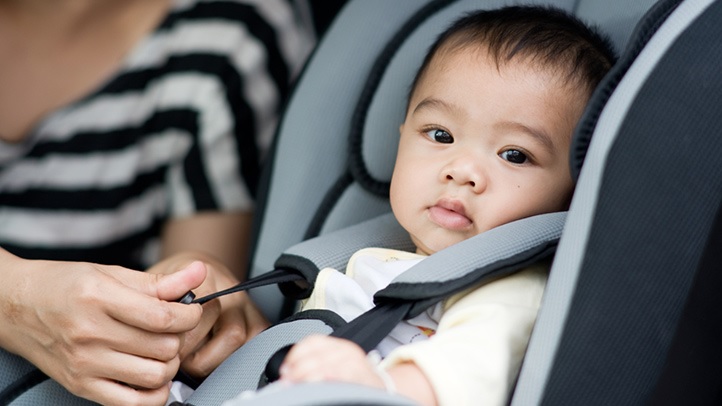

You bought a car seat for your baby because you want to bring them to places like to a park or to the grocery store. You want to bring them wherever you go, whether in your quick errand or your long family trip, but before you can do that, you need to know first where to put the car seat in the safest way.
Baby car seats are safety seats that are used to transport babies from birth to around the age of two. They are made exactly to keep newborns and infants safe inside the cars, SUVs, and other type of vehicles. You can say that they are like travel essentials, just like a stroller for newborn. These two can go hand in hand. When your baby comes out of the car seat, the stroller will be your best friend in moving your baby around easily.
Understanding the Safest Spot for Your Car Seat
Car crashes are one of the main culprits for the deaths of babies and kids. That’s super scary to just think about, but luckily, car seats do really work. When used in the right way, they lower the chance of serious injury by up to 82 percent for kids in crashes.
The spot that is the safest should give your child the utmost protection from impact and will give them the secured position every ride.
-
The Safest Is the Middle Back Seat
Many safety experts say that the rear middle seat has the highest level of protection. This is because it is the farthest from possible impact zones during a collision. Not to mention, this position also gives a stable, central position that lessens risk. If you can install the car seat in the center, you should consider this position your first and only choice.
-
If the Middle Is Not Available, Go for the Rear Passenger Side
You cannot install a car seat in the middle in all vehicles due to many factors like seat design, anchors, or size. In this instance, the rear passenger side is your next choice. It will also be easier for you to load and unload your baby from the curb side. This position is also helpful in busy parkings or when parallel parking.
-
Do Not Install in the Front Seat No Matter What
Newborns and young children should never ever ride in the front seat. The airbags in the front can cause serious injury to babies, even in low-speed accidents. That is why it is suggested to keep your infant in the back seat because it protects them from the deployment of airbags and makes sure the car seat stays secured on its place.
Why the Back Middle Seat is Often the Ideal Choice
The most recommended safest spot for your baby’s car seat is the back middle seat. As mentioned earlier, this position gives your baby the highest level of protection, in case some accidents might happen.
-
Farthest from impact zones: With your baby in the middle position, they’re away from both sides of the vehicle, where many collisions tend to happen.
-
Better protection during side-impact crashes: Side crashes are very dangerous, and the center seat lessens direct force on your child.
-
Natural buffer zone: The seats on both side of the car serves as your baby’s protective barrier, protecting them from broken glass, crumpled doors, and side airbags.
-
Located in the strongest part of the vehicle: The middle back area is really made in the strongest way possible. It gives you the stability so you can install the car seat securely.
-
Uniform alignment in the vehicle: Your baby stays in the middle position, so the car seat remains properly on its position during sudden stops or turns.
When the Rear Passenger or Driver Side Seats Are Necessary
Even though the back middle seat is the safest spot for the car seat, there are times that is not always the practical one or not possible for every car or every family. With that being said, you can alternatively install the car seat on the rear passenger side or rear driver side. These seats are still safe as long you install the car seat in the correct way.
You may need to install your car seat in the side seat if:
-
You can’t properly install the car seat in the middle seat
-
You have multiple children in the car seats
-
The car seat doesn’t fit well in the middle
-
You need easier access for your daily routine
-
You need more legroom in the front
Important Considerations for Choosing the Best Position in Your Specific Vehicle
Not all vehicles are the same, which means the safest spot for your baby’s car seat can change. Before you make your decision where to put car seat, remember to take note of these considerations:
-
Check your vehicle’s car seat manual
In the car’s owner manual, you’ll find out which seats are made for LATCH anchors, which ones are compatible with car seats, and if there are any restrictions you should follow.
-
Know your LATCH anchor locations
Not every back seats have lower anchors or top tethers, so make sure that the seat you choose has the correct anchor points.
-
Ensure a tight and secure fit
It is only considered a safe spot if the car seat fits tightly. It should not move more than one inch side-to-side or front-to-back once installed.
-
Check seat shape and cushioning
There are middle seats that are too narrow, raised, or uneven. And this makes the installation tricky or unstable. Side seats may give you a better base, depending on your car.
-
Consider the car seat type you’re using
For your information, infant seats, convertible seats, and booster seats fit in different manner. For example, you may not secure well the bulky convertible seats in the middle, but they’ll fit perfectly on the sides.
Key Differences Between Rear-Facing and Forward-Facing Seat Placement
The rear-facing and forward-facing seats work in different ways. These orientation differ in how you need to install them and their ideal position in the car.
Rear-Facing Car Seats
Rear-facing seats are specifically made to cradle your little one and absorb the crash forces, especially during frontal collisions, which is the most common type of crash. This orientation protects the most vulnerable body parts of your baby: their head, neck, and spine.
Key points for rear-facing placement
-
Best to place in the back seat, ideally in the center when possible
-
You need a more reclined angle to keep your newborn’s airway open
-
It protects better against frontal crashes
-
Placing it at the front seat is strongly not advisable because the active airbags can cause fatal injuries
-
Works well with travel systems, so you’ll have smooth transfers to stroller for newborn
Forward-Facing Car Seats
Forward-facing car seats are designed for older toddlers and children who have better head and neck control. They depend on the harness of the car seat and the top tether to keep your baby secure.
Key points for forward-facing placement
-
This car seat should be installed in the back seat, in the center.
-
You need a top tether anchor to prevent head injury
-
For the harness to be properly positioned, the car seat should be installed in an upright position
-
Not suitable for newborns or younger babies, because spines won’t be able to handle the forward crash forces
Navigating Car Seat Placement in Two-Door and Smaller Cars
It’s a little bit challenging if you’re going to install a car seat in a two-door vehicle or smaller cars. But don’t worry, placing one in these vehicles are possible. Though you really need to plan it because of the smaller spaces and the limited access.
-
Always go for the back seat, even in tight spaces
The back seat is always the safest place for your child, no matter what the size of the vehicle is. Your child’s safety should be your priority at all times even if the access feels inconvenient in a two-door car.
-
The rear passenger side will always be the most practical one
In compact or two-door cars, the easiest place you can install the car seat is the rear passenger side.
-
You can easily get your baby in and out of the car
-
You are able to buckle your baby safely from the curb instead of stepping into the traffic
-
You can adjust the front passenger seat to give more space for a rear-facing seat
-
The middle seat may not work at all times
In larger vehicles, the back middle seat is ideal for the car seat, but sometimes, that is not the case for smaller cars, since they have:
-
An elevated or narrow center seat
-
Limited anchor points
-
The seatbelts don’t align well with car seat bases
Common Mistakes to Avoid When Installing a Car Seat
Even if you bought the best car seat, the one with the most protective features, if you don’t install it the right way, it won’t still be able to protect your baby. Avoid these common mistakes when you install the car seat of your little one.
-
Installing the car seat too loosely: The car seat of your baby should not move more than one inch from side to side or front to back at the belt path. One of the most common mistakes parents do when installing the car seat is it is too loose.
-
Using both the LATCH system and the seat belt: Car seats are designed to use either LATCH or the vehicle seat belt, not both at the same time.
-
Incorrect recline angle: Babies need the proper recline angle to keep their airway open. Too upright can cause breathing issues; too reclined can affect safety in a crash.
Other mistakes to avoid when you install the car seat
-
The harness straps are too loose
-
Placing the chest clip too low
-
Not using the top tether for forward-racing seats
-
Incorrect positioning for your vehicle type
-
Forgetting to recheck the seat over time
-
Not registering your car seat
Expert Tips for Achieving a Secure and Correct Installation
It doesn’t have to be hard when you’re installing the car seat of your baby. Well, it won’t be hard if you follow these tips to make sure that your baby’s seat is stable and is positioned properly.
-
Always read both manuals, every car seat and vehicle is different
-
Go for the method that gives the tightest fit, whether it is the LATCH or seat belt
-
Test the seat for movement at the belt path
-
Check the correct recline angle for rear-facing seats
-
Lock the seatbelt if you’re using it
-
Always use the top tether for forward-facing seats
-
Check for airbag and side-curtain safety
-
Recheck the seat regularly
Summary
One of the most important steps in keeping your baby safe on the road is that you find the right spot for your child’s car seat. The back middle is often the safest option, but not vehicle and family is the same. Sometimes, the side seats can also be your choice, only when it is installed properly.
Now that you know where to put car seat, you’re giving your baby the safety they need whenever you travel with your family. And if you’re using a stroller for newborn, you can move your baby from the car to the stroller without exerting any extra effort.

Comments are closed.